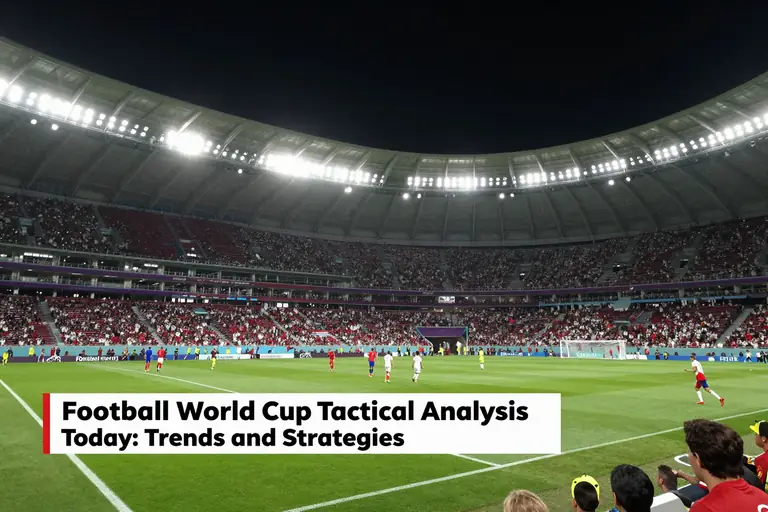

When looking at the Football World Cup, understanding the tactical setup and how teams are reviewed is key to appreciating the beautiful game beyond just the scores. We’ll explore the common formations, player roles, and strategic decisions that shape World Cup matches, giving you a clearer picture of what to look for when analyzing a team’s performance. This isn’t just about who wins or loses; it’s about the chess match happening on the pitch, the adjustments coaches make, and how individual brilliance fits into a larger team plan.
Understanding World Cup Tactics
Football tactics evolve, but certain formations remain staples in the World Cup. Each setup has its strengths and weaknesses, influencing how a team attacks, defends, and controls the midfield.
Common Tactical Formations and Their Impact
- 4-3-3: This attacking formation emphasizes wing play and often features a strong central striker. It requires energetic full-backs who can push forward and three versatile midfielders to support both defense and attack. Teams using this often look to dominate possession and create wide overloads.
- 4-2-3-1: A popular choice for its balance, the 4-2-3-1 provides a solid defensive base with two holding midfielders, while the attacking midfielder and wide players support a lone striker. This setup allows for quick transitions and flexibility in breaking down defenses.
- 3-5-2 (or 5-3-2): Often seen with teams that prioritize defensive solidity and counter-attacking, this formation uses three central defenders and two wing-backs who provide width. The midfield three are crucial for winning the ball and distributing it quickly to the front two. It can be very effective against teams that rely on traditional wingers.
- 4-4-2: A classic formation, the 4-4-2 offers simplicity and strong defensive lines. Two strikers can work together, while the wide midfielders provide crosses and track back to help the full-backs. It’s less common in modern elite football but can still be effective for disciplined teams.
Coaches often adapt these formations mid-game based on the opponent’s strategy or the match situation. Understanding these basic structures helps us analyze why certain substitutions are made or why a team’s performance shifts.
Key Elements of Team Review
Reviewing a team’s performance goes beyond just looking at statistics. It involves a deeper dive into several critical areas:
- Player Roles and Responsibilities: How well do players execute their assigned tasks? Is the central defender effectively organizing the backline? Is the creative midfielder finding pockets of space and distributing the ball? Are the strikers pressing effectively?
- Defensive Shape and Pressing: Does the team defend as a unit? How high up the pitch do they press? Are there gaps between lines that can be exploited? Effective pressing can disrupt an opponent’s rhythm and force turnovers in dangerous areas.
- Attacking Patterns and Creativity: Does the team have clear attacking strategies, or do they rely solely on individual brilliance? Are they creating chances through set pieces, wide play, or central combinations? The ability to vary attacking approaches makes a team harder to defend against.
- Midfield Control and Transitions: The midfield battle is often where games are won or lost. Which team is winning the second balls? Who is dictating the tempo? How quickly does the team transition from defense to attack, and vice-versa?
- Set-Piece Effectiveness: Corner kicks and free kicks can be game-changers. Does the team have well-rehearsed routines for both attacking and defending set pieces?
- Substitutions and Managerial Decisions: How do the coach’s changes impact the game? Do substitutions address tactical weaknesses or introduce fresh attacking impetus? A good manager can turn the tide with timely and effective changes.
When we review a team, we consider how these elements come together, looking for consistency, adaptability, and areas for improvement.
Tactical Adjustments During the Tournament
The World Cup is a long tournament, and teams rarely stick to one rigid plan. Successful teams often show tactical flexibility. For instance, a team might start with a defensive 5-3-2 against a strong attacking opponent, then switch to a more aggressive 4-3-3 in a must-win group stage match.
Coaches spend countless hours analyzing opponents, looking for weaknesses to exploit. This can mean:
- Man-marking key players: Assigning a specific player to neutralize an opponent’s star midfielder or forward.
- Exploiting wide areas: If an opponent has slow full-backs, a team might focus their attacks down the wings.
- Overloading the midfield: Bringing an extra player into central midfield to outnumber the opponent and control possession.
- Counter-attacking strategy: Sitting deep, absorbing pressure, and then launching quick attacks when the opponent commits too many players forward.
These adjustments are what make each match unique and unpredictable. It’s not just about having the best players, but about how those players are deployed and managed throughout the competition.
Practical Considerations for World Cup Engagement
Player Feedback and User Experience
When we consider the user experience of following the World Cup, especially for those who engage with betting, understanding these tactical nuances can greatly enhance the experience. Our platform aims to provide insights that go beyond basic match statistics. We encourage our users to delve into team news, injury reports, and expert analysis to inform their decisions.
For example, if you see a team known for a strong defensive 4-4-2 suddenly switch to a more open 4-3-3, it might indicate a shift in their game plan – perhaps they need to score, or they feel confident attacking a particular opponent. This kind of information, combined with a review of player form and previous tactical successes, helps build a more informed picture.
Practical Tips for Analyzing Team Setups
To get the most out of watching the World Cup, consider these practical tips for analyzing tactical setups:
- Watch the first 15 minutes closely: This often reveals a team’s initial tactical intent. Look at how they line up, where they press, and their general approach.
- Observe player movement off the ball: Are players making intelligent runs to create space? Are defenders maintaining their shape?
- Pay attention to substitutions: What is the coach trying to achieve with each change? Is it an attacking, defensive, or like-for-like swap?
- Consider the context: Is it a group stage match where a draw is enough, or a knockout game where only a win matters? This influences a team’s risk-taking.
- Review post-match analysis: Many sports analysts break down tactical decisions after games, offering valuable insights you might have missed.
Remember, engaging with the World Cup should always be enjoyable. If you choose to place bets, do so within your limits. Understand that even the best tactical analysis cannot guarantee outcomes, as football is inherently unpredictable. Play smart and safe, and always know when to stop.
Withdrawal Speed and KYC/Account Verification
For users engaging with online betting platforms during the World Cup, understanding operational aspects is crucial. Withdrawal speeds can vary significantly, typically ranging from instant to several business days, depending on the platform and chosen payment method. E-wallets often offer the fastest withdrawals, while bank transfers can take longer.
KYC (Know Your Customer) and account verification are mandatory processes designed to ensure security and prevent fraud. This usually involves submitting identification documents like a government-issued ID, proof of address (utility bill), and sometimes proof of payment method. Completing this verification promptly after registration is highly recommended, as it often prevents delays when attempting to withdraw funds later. Unverified accounts may face withdrawal restrictions or account suspension.
Who This Analysis Suits (and Who It Doesn’t)
This type of in-depth tactical review is ideal for football enthusiasts who enjoy the strategic side of the game, sports bettors looking for an edge beyond surface-level statistics, and aspiring coaches or analysts. It suits those who are willing to invest time in understanding the subtleties of team play.
It does not suit:
- Casual fans only interested in scores: If you prefer a quick glance at the final result without delving into the ‘how’ or ‘why,’ the detailed tactical breakdown might feel overwhelming or unnecessary.
- Those seeking guaranteed betting outcomes: While tactical analysis can inform betting decisions, it’s not a crystal ball. Football remains unpredictable, and this analysis doesn’t offer surefire winning strategies, only deeper insights.
- Users with limited time for in-depth research: Understanding tactical nuances requires dedicated observation and analysis. If you’re looking for instant, superficial information, this level of detail may not be for you.
- Individuals who dislike complex sports discussions: For some, sports are purely about entertainment and passion. Detailed discussions about formations, player roles, and strategic adjustments might detract from that simpler enjoyment.
Our platform caters to a wide range of users, but for those who truly appreciate the strategic depth of the World Cup, these insights can be particularly rewarding.
Philippines User Notes
For users in the Philippines, participation in online betting related to the World Cup should always be done through platforms that are legally accessible and regulated. While tactical analysis is universal, the legal landscape for online gaming can differ. Ensure the platform you choose supports local payment methods (e.g., GCash, PayMaya, local bank transfers) and provides customer support tailored to the Philippine market. Be aware of any local regulations regarding online gambling to ensure a safe and compliant experience. Always prioritize responsible gaming and set personal limits for your activities.
FAQ
What is the most common formation used in the Football World Cup?
While formations vary, the 4-2-3-1 and 4-3-3 have been very popular in recent World Cups due to their balance and attacking potential.
How do coaches decide on a tactical setup for a match?
Coaches consider their own team’s strengths, the opponent’s weaknesses, player availability, and the importance of the match (e.g., group stage vs. knockout).
Can a team change its tactical setup during a game?
Yes, coaches frequently make tactical adjustments through substitutions, changing player roles, or altering the team’s defensive or attacking shape, often in response to the opponent’s strategy or the scoreline.
What is the role of a holding midfielder in a tactical setup?
A holding midfielder primarily protects the defense, breaks up opponent attacks, and initiates build-up play from deep, acting as a crucial link between defense and attack.
Why is tactical flexibility important in a World Cup tournament?
Tactical flexibility allows teams to adapt to different opponents, overcome unexpected challenges like injuries or suspensions, and adjust their strategy based on evolving match situations, which is crucial for progressing through the various stages of the tournament.