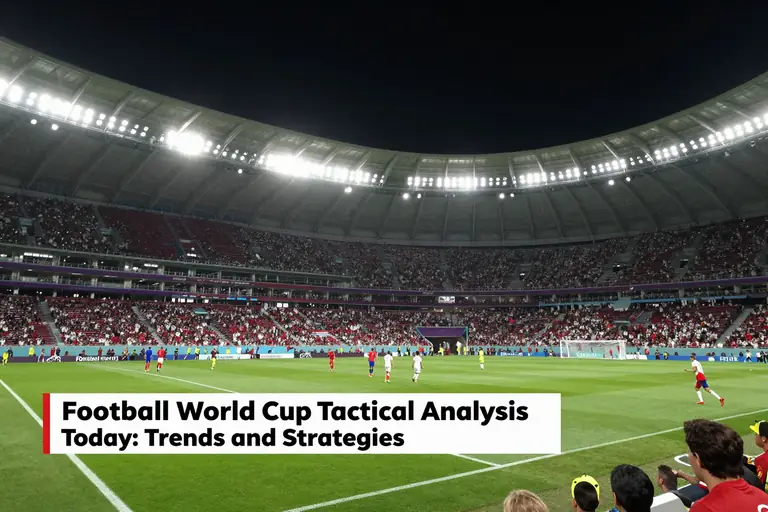
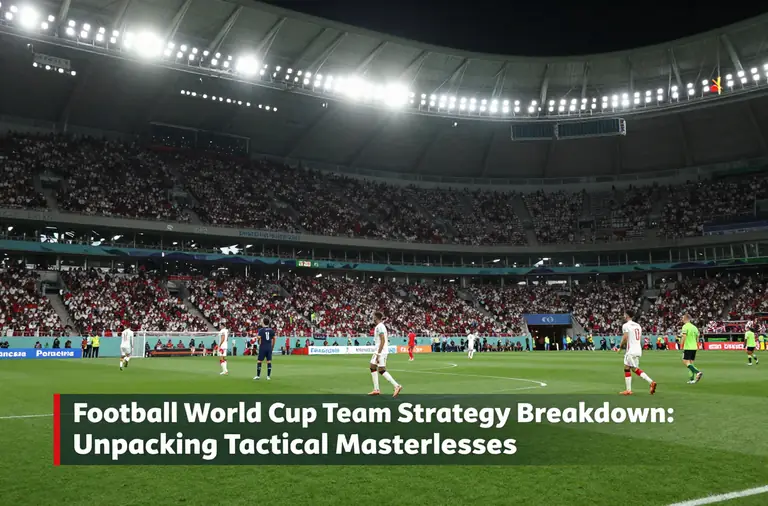
The Football World Cup is more than just a showcase of individual talent; it’s a grand stage for tactical innovation and strategic brilliance. For fans who follow the beautiful game closely, understanding the nuances of a team’s approach can make watching each match even more rewarding. Our site delves into the intricate world of a Football World Cup Team Strategy Breakdown, explaining how coaches prepare their squads, adapt to opponents, and navigate the pressures of the biggest tournament in football. We’ll explore common tactical frameworks, the importance of flexibility, and how different playing philosophies clash on the global stage.
The Foundation: Philosophy and Formation
Every successful World Cup campaign starts with a clear footballing philosophy. Is the team built for attacking flair, relying on quick transitions and creative midfielders? Or is it a defensive powerhouse, aiming for solidity at the back and clinical counter-attacks? The choice of formation often reflects this core philosophy. A 4-3-3 might emphasize width and attacking prowess, while a 3-5-2 could prioritize central midfield dominance and wing-back progression.
However, a formation is just a starting point. Modern football demands fluidity. Teams rarely stick rigidly to one shape throughout a match, let alone an entire tournament. We often see formations shift based on whether a team is in possession or defending, or in response to an opponent’s setup. For example, a coach might start with a 4-2-3-1 but transition to a 4-4-2 when out of possession, creating a more compact defensive block. This tactical adaptability is crucial for navigating the diverse styles encountered in a World Cup.
Key Tactical Elements to Watch
Beyond formations, several tactical elements define a team’s strategy. Our coverage often highlights these in our match analysis:
Pressing Schemes
How and where does a team try to win the ball back? A high press aims to recover possession deep in the opponent’s half, while a mid-block focuses on denying space centrally. The effectiveness of a press depends on the collective effort and synchronization of the players.
Build-up Play
Does the team favor short passes from the back, drawing opponents out before exploiting space? Or do they opt for more direct balls, bypassing the midfield to quickly get into attacking areas? The chosen build-up method often dictates the tempo of the game.
Set-Piece Routines
Corners and free kicks are often overlooked but can be decisive. Teams spend countless hours designing specific routines to create goal-scoring opportunities or prevent them. A well-drilled set-piece can be the difference in a tight knockout match.
Player Roles and Instructions
Individual player roles within the system are paramount. A defensive midfielder might be tasked with screening the back four, while a winger could be instructed to cut inside or stay wide. Understanding these specific instructions helps decode the larger team strategy.
Adapting to Opponents and Tournament Stages
A significant part of any Football World Cup Team Strategy Breakdown involves game-to-game adjustments. Group stage matches might see teams experimenting or conserving energy, especially if they face a perceived weaker opponent. As the tournament progresses to the knockout rounds, the stakes rise, and tactical caution often increases.
Coaches meticulously scout opponents, identifying their strengths and weaknesses. This intelligence then informs their game plan. For instance, if an opponent has a potent wide player, a team might deploy an extra defender on that flank or instruct their full-back to play a more conservative role. Conversely, if an opponent struggles with aerial balls, a team might emphasize crosses into the box. The ability to switch between different game plans and react to in-game developments is a hallmark of successful World Cup teams. We’ve seen numerous examples where a halftime substitution or a tactical tweak completely changed the momentum of a match.
Historical Context: Evolution of World Cup Tactics
Football tactics have continuously evolved, and the World Cup has often been a crucible for these changes. From the “W-M” formation of the early 20th century to the “Total Football” of the 1970s and the sophisticated pressing games of today, each era has left its mark. Studying past World Cup winners reveals common threads: defensive solidity, tactical discipline, and often, a touch of individual brilliance. However, it also shows how innovation can disrupt the established order. The rise of data analytics and sports science has further refined tactical approaches, allowing coaches to gain deeper insights into player performance and opponent tendencies. Our analysis often draws on this rich history to provide context to current tactical trends.
FAQ
What is the most common formation used in the World Cup?
While formations vary widely, the 4-3-3 and 4-2-3-1 have been very popular in recent World Cups, offering a balance between defensive solidity and attacking options. However, many teams also use variations of a back three or five, depending on their player personnel and tactical philosophy.
How do teams adjust their strategy during a match?
Coaches often make adjustments through substitutions, changing a player’s role, or altering the team’s shape. This could be in response to an opponent’s tactic, an injury, or simply to gain a tactical advantage, such as pushing for a goal or shoring up the defense.
Are tactical innovations more important than individual player quality in the World Cup?
Both are crucial. While individual brilliance can win a moment, a strong tactical framework provides the platform for those moments to happen consistently. A well-drilled team with a clear strategy can often overcome a collection of talented individuals who lack cohesion.