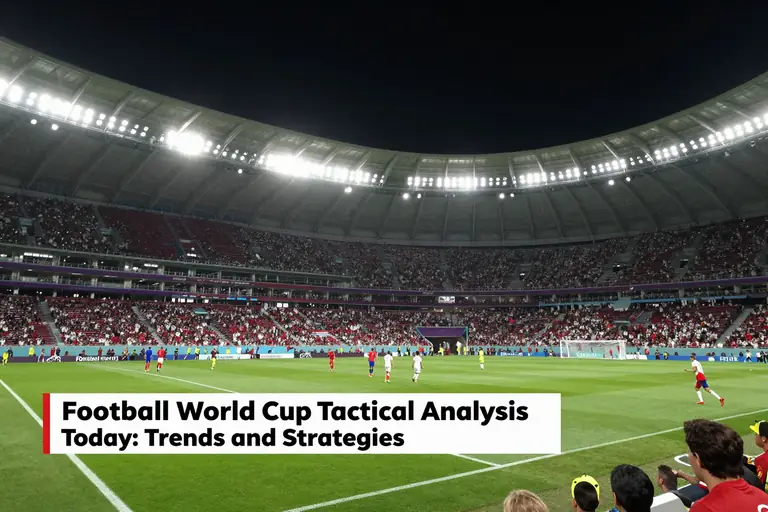

Understanding World Cup Success: Beyond the Scoreline
On our site, we often get asked what truly sets apart the champions from the contenders in the biggest football spectacle. It’s more than just individual brilliance; it’s about how a team functions as a cohesive unit, adapting tactics, and executing under immense pressure. This deep dive into Football World Cup Team Performance and Tactical Analysis will explore the elements that contribute to a team’s journey through the tournament, from group stages to the final whistle.
Team Analysis: The Foundations of a Campaign
When we look at successful World Cup campaigns, the groundwork is laid long before the first whistle blows. A strong team isn’t just a collection of talented individuals; it’s a squad with depth, clear roles, and a shared understanding of their manager’s philosophy. Consider the 2014 German squad, a prime example of a well-oiled machine where every player understood their contribution to the collective goal. Their ability to rotate players without a significant drop in quality was key to managing the demanding schedule.
Another crucial aspect is squad cohesion. Teams with a strong bond, often built over years of playing together or under the same coach, tend to perform better in high-stakes environments. This psychological edge can be as important as any tactical setup. We’ve seen teams with seemingly less individual talent outperform more star-studded lineups simply because they played as a true unit.
Tactical Overview: Adapting to the Global Stage
Tactics in the World Cup are a fascinating chess match. Managers often arrive with a preferred system, but the truly successful ones are those who can adapt. This might mean altering formations to counter specific opponents, changing pressing schemes based on the energy levels of the squad, or even switching philosophies mid-tournament. For instance, sometimes a team shifts from an expansive, attacking style to a more pragmatic, defensive approach in the knockout rounds, prioritizing results over aesthetics.
Possession-based football, counter-attacking, high pressing, low blocks – all have had their moments of glory. The key is execution and finding the right balance for the players available. Brazil’s 1970 team is often lauded for its attacking flair, but their tactical discipline and ability to transition quickly were equally vital. More recently, France in 2018 showcased a masterclass in pragmatic, counter-attacking football, leveraging their fast attackers and solid defensive structure.
Set-pieces are another area where tactical analysis can yield significant advantages. A well-drilled corner routine or free-kick can be the difference between advancing and going home, especially in tight matches. We pay close attention to how teams utilize these moments, as they often reveal a deeper level of preparation.
Recent Results and Form: Momentum is Everything
Entering a World Cup with good form is invaluable. Recent results can build confidence and generate positive momentum, which is crucial for navigating the early stages of the tournament. A team on a winning streak often has a belief system that can carry them through difficult moments. Conversely, teams struggling with form might find it harder to shake off doubts when faced with adversity.
However, it’s not just about winning; it’s about how those wins are achieved. Are they grinding out results, or are they dominating opponents? Are key players in peak condition, or are they showing signs of fatigue? Our coverage always considers these nuances when assessing a team’s readiness for the global stage. The physical demands of the World Cup are immense, and a team’s fitness levels, as demonstrated by their recent output, can be a major predictor of their staying power.
Historical Context: Lessons from Past Tournaments
While every World Cup is unique, history often offers valuable insights. Understanding how previous champions and contenders approached the tournament can inform our understanding of current performances. For example, the importance of a strong defense has been a consistent theme throughout World Cup history. Teams that concede few goals often go far in the competition, even if their attacking output isn’t always spectacular.
The pressure of the World Cup stage is unlike any other, and teams with players who have prior experience in such tournaments often benefit. That veteran presence can stabilize a squad during tense moments. Looking back, the most successful nations often have a core group of players who have matured together through several international cycles, bringing a wealth of experience to the field.
Player Watch: Individual Brilliance within a System
While we emphasize team performance, the impact of individual players cannot be understated. A moment of magic from a star player can change the course of a game, or even a tournament. However, even the most brilliant individuals need a system that allows them to flourish. Our analysis often highlights players who not only perform well but also fit seamlessly into their team’s tactical framework, enhancing the overall Football World Cup Team Performance and Tactical Analysis.
We look at factors like a striker’s finishing ability, a midfielder’s passing range, a defender’s aerial prowess, or a goalkeeper’s shot-stopping and distribution. These individual attributes, when combined effectively, contribute significantly to a team’s overall strength and tactical execution. The rise of young talents as well as the enduring performance of seasoned veterans always makes for compelling viewing.
FAQ
Q: What are the main factors determining a team’s World Cup success?
A: Key factors include squad depth, tactical flexibility, team cohesion, current form, and the ability of key players to perform under pressure.
Q: How important is a manager’s tactical approach in the World Cup?
A: A manager’s tactical approach is crucial, especially their ability to adapt formations and strategies to counter specific opponents and leverage their team’s strengths.
Q: Can a team with less individual talent still perform well in the World Cup?
A: Absolutely. Strong team cohesion, tactical discipline, and a collective work ethic can often allow teams with less individual talent to outperform more star-studded squads.
Q: What role does historical context play in analyzing team performance?
A: Historical context helps us understand consistent patterns, such as the importance of strong defense or experienced players, which can inform our expectations for current teams.
Q: How do individual player performances fit into overall team analysis?
A: While team performance is paramount, individual brilliance from key players can be decisive. Our analysis considers how these individual talents contribute to and are supported by the team’s tactical system.