Football World Cup Match Review and Tactical Breakdown: Argentina vs. France – A Comprehensive Analysis
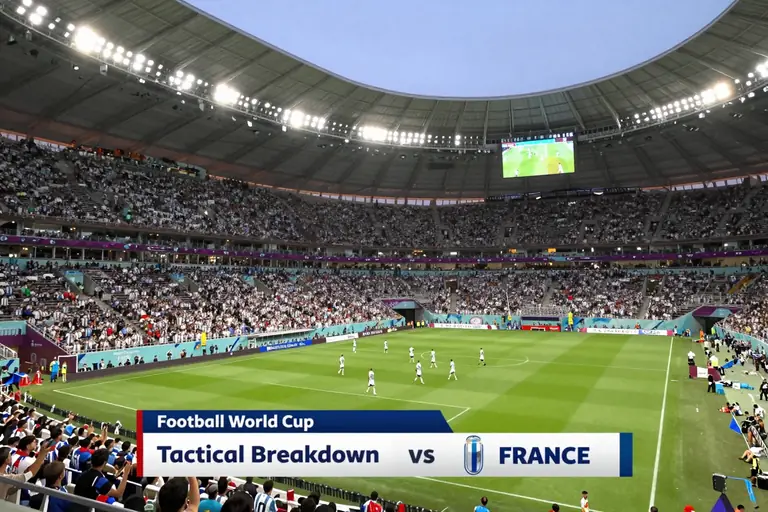
The 2022 FIFA World Cup final between Argentina and France wasn’t just a game; it was a theatrical masterpiece, a clash of titans painted with strokes of tactical genius, individual brilliance, and heart-stopping drama. This Football World Cup Match Review and Tactical Breakdown delves deep into the strategies implemented by Lionel Scaloni and Didier Deschamps, dissecting pivotal moments, evaluating individual performances, and ultimately understanding the nuances that crowned Argentina as world champions.
Pre-Match Analysis: Formations, Key Players, and Anticipated Strategies
Leading up to the final showdown, Argentina, fueled by Lionel Messi’s unwavering ambition to lift the World Cup trophy, had steadily gained momentum. Overcoming the initial shock of their defeat against Saudi Arabia, Scaloni had forged a resilient and adaptable squad, primarily employing a 4-3-3 or 4-4-2 formation. This tactical flexibility allowed for both defensive solidity and rapid transitions into attack, a hallmark of their campaign.
France, the reigning World Cup champions, faced challenges with pre-tournament injuries, yet still possessed a formidable lineup, boasting world-class talents like Kylian Mbappé. Deschamps, a tactical mastermind in his own right, predictably favored his tried-and-tested 4-2-3-1 formation, relying on the explosive pace and power of his attacking players to dismantle opposing defenses.
Pre-match discussions largely centered around Argentina’s approach to containing the electrifying Mbappé and France’s strategy for neutralizing Messi’s unparalleled creativity. Experts anticipated a tightly contested, tactical battle, with both teams acutely aware of the potentially devastating consequences of errors in such a high-stakes environment. This Football World Cup Match Review and Tactical Breakdown utilizes these pre-game assessments as a framework for analyzing the unfolding events on the pitch.
First Half Domination: Argentina’s Tactical Supremacy
The first half served as a powerful demonstration of Argentina’s meticulous preparation and flawless execution. They asserted complete control of possession, relentlessly pressing France high up the field, effectively suffocating their ability to build any coherent attacking sequences. The Argentine midfield trio, composed of Rodrigo De Paul’s tireless energy, Enzo Fernández’s composed distribution, and Alexis Mac Allister’s intelligent positioning, dictated the game’s tempo and consistently emerged victorious in crucial midfield duels.
Angel Di Maria, deployed on the left wing, proved to be a constant thorn in the side of Jules Koundé, earning a penalty after a clumsy challenge and consistently terrorizing the French defense with his direct runs and incisive passes. Messi calmly converted the resulting penalty, granting Argentina a crucial early advantage. Shortly thereafter, Di Maria capped off a brilliant counter-attacking move with a composed finish, doubling Argentina’s lead and sending ripples of shock through the French ranks.
France appeared utterly overwhelmed, struggling to cope with Argentina’s relentless intensity and tactical discipline. Deschamps’s decision to start Olivier Giroud and Ousmane Dembélé proved ineffective, as both players were largely anonymous and were subsequently substituted before halftime, a clear indication of the manager’s dissatisfaction. A comprehensive Football World Cup Match Review and Tactical Breakdown emphasizes Argentina’s effective pressing strategy, midfield dominance, and tactical adaptability in the first half.
France’s Second-Half Resurgence: A Tactical Rejig and Individual Brilliance
Trailing 2-0 at halftime, Deschamps responded decisively, making two critical substitutions by introducing Marcus Thuram and Randal Kolo Muani. These changes injected a much-needed surge of energy and dynamism into the French attack. However, for a considerable portion of the second half, Argentina continued to thwart France’s attacking endeavors. They defended with unwavering determination, effectively limiting Mbappé’s opportunities and maintaining their disciplined defensive structure.
The game underwent a dramatic transformation in the final ten minutes. Kolo Muani’s forceful run drew a penalty, which Mbappé confidently converted, igniting a spark of hope for France. A mere minute later, Mbappé unleashed a breathtaking volley, leveling the scores and completing a remarkable turnaround. Argentina were visibly shaken, and France suddenly seized the initiative, relentlessly pushing for a winning goal. This Football World Cup Match Review and Tactical Breakdown highlights the pivotal impact of Deschamps’s substitutions in revitalizing the French attack and dramatically altering the game’s trajectory.
Extra Time: A Rollercoaster of Emotions, Goals, and Controversies
Extra time unfolded as a nerve-wracking and captivating spectacle, brimming with moments of brilliance and agonizing near-misses. Both teams had golden opportunities to clinch victory. Messi appeared to have secured the win for Argentina with a close-range finish, sending the Argentine faithful into jubilation. However, Mbappé completed his sensational hat-trick with another penalty after a handball by Gonzalo Montiel, reigniting French hopes and forcing the game into a penalty shootout.
The Decisive Penalty Shootout: Nerves of Steel and Goalkeeping Heroics
The penalty shootout proved to be a fitting finale to an unforgettable final, showcasing the immense pressure and mental fortitude demanded at the highest level of the sport. Argentina goalkeeper Emiliano Martinez emerged as the hero, saving Kingsley Coman’s penalty and unsettling Aurélien Tchouaméni, who subsequently missed his spot-kick. Argentina ultimately triumphed in the shootout, winning 4-2 and securing their long-awaited third World Cup title. A complete Football World Cup Match Review and Tactical Breakdown must acknowledge the immense psychological burden of the shootout and its profound influence on the players’ performances.
Tactical Analysis: Key Battles and Decisive Moments Revisited
Several tactical battles proved crucial in determining the match’s outcome. Argentina’s midfield dominance in the first half was instrumental in their control of the game. De Paul’s relentless work ethic, Fernández’s composure on the ball, and Mac Allister’s intelligent movement provided a solid foundation for their attacking endeavors. Di Maria’s exceptional performance on the left wing exposed Koundé’s defensive vulnerabilities and created numerous opportunities for Argentina.
France’s initial struggles stemmed from their inability to cope with Argentina’s intense pressing and their lack of creativity in midfield. Antoine Griezmann, usually a key player for France, was largely ineffective, and Giroud offered little threat up front. Deschamps’s substitutions proved pivotal in altering the game’s dynamic, but ultimately, they were unable to prevent Argentina from winning the shootout. This Football World Cup Match Review and Tactical Breakdown emphasizes the critical importance of tactical adaptability in modern football.
Scaloni’s tactical flexibility throughout the tournament was a significant factor in Argentina’s success. He consistently adapted his formation and personnel to suit different opponents, and his in-game management was generally excellent. Deschamps, on the other hand, appeared somewhat rigid in his approach, and his initial team selection proved to be a miscalculation. This Football World Cup Match Review and Tactical Breakdown emphasizes the critical importance of tactical adaptability in modern football.
Individual Performances: Heroes and Heartbreak – A Deeper Look
Lionel Messi’s performance in the final was nothing short of legendary. He scored two goals, orchestrated the game’s tempo, and inspired his team with unwavering determination, solidifying his legacy as arguably the greatest footballer of all time. Di Maria also delivered an exceptional performance, consistently troubling the French defense and scoring a crucial goal. Emiliano Martinez’s heroics in the penalty shootout cemented his place in Argentine football folklore.
For France, Mbappé’s hat-trick was a remarkable feat, but he was often isolated for extended periods of the game. Kolo Muani’s impact off the bench was significant, winning a penalty and injecting pace into the attack. However, several of France’s key players, including Griezmann and Giroud, underperformed on the biggest stage.
This Football World Cup Match Review and Tactical Breakdown also acknowledges the contributions of the often-overlooked players who were integral to the overall team performance. The Argentine defense, led by Nicolás Otamendi and Cristian Romero, was generally solid, while the French midfield struggled to gain control of the game. Players like Marcos Acuña and Cristian Romero provided crucial tackles and interceptions.
The Filipino Perspective: Lessons and Inspirations
For Filipino football fans, the Argentina vs. France final offered valuable lessons in tactical discipline, adaptability, and the importance of a strong team spirit. The Azkals, the Philippines national football team, can draw inspiration from Argentina’s resilience and tactical flexibility. The importance of a well-organized midfield, as demonstrated by Argentina, is a key takeaway for developing a competitive national team. Moreover, the individual brilliance of players like Messi and Mbappé underscores the need for nurturing young talents and providing them with opportunities to shine on the international stage. The passion and dedication displayed by both teams serve as a reminder of the power of football to unite and inspire.
Conclusion: An Unforgettable World Cup Final – A Legacy Defined
The 2022 World Cup final was a truly unforgettable spectacle, encapsulating the very essence of the beautiful game. It possessed all the elements of a classic: drama, excitement, tactical intrigue, and moments of individual brilliance. Argentina’s victory was a resounding testament to their resilience, tactical discipline, and the unparalleled genius of Lionel Messi. France, despite their valiant comeback, ultimately fell short, but their performance showcased their fighting spirit and the exceptional talent of Kylian Mbappé.
This Football World Cup Match Review and Tactical Breakdown has meticulously analyzed the key moments and decisions that shaped the outcome of this epic encounter. The match will be etched in the annals of football history as one of the greatest World Cup finals of all time. It provided a fascinating case study in tactical approaches, highlighting the importance of adaptability, individual brilliance, and unwavering mental fortitude. A final Football World Cup Match Review and Tactical Breakdown observation: Argentina’s overall game plan proved more effective in securing their triumph.
FAQ
Q: What was the key tactical difference between Argentina and France in the first half?
A: Argentina’s high-pressing strategy and midfield dominance in the first half allowed them to control the game and prevent France from establishing their usual attacking rhythm. They effectively disrupted France’s build-up play and created turnovers in dangerous areas.
Q: How did France manage to come back in the second half, and what adjustments did they make?
A: Deschamps’s substitutions, particularly the introduction of Kolo Muani and Thuram, injected pace and energy into the French attack. These players provided a more direct threat and stretched the Argentine defense. France also increased their pressing intensity, forcing Argentina to defend deeper.
Q: What role did Lionel Messi play in Argentina’s victory, and how did Argentina utilize him effectively?
A: Messi was instrumental in Argentina’s victory. He scored two goals, dictated the tempo of the game, and inspired his teammates with his leadership, determination, and exceptional skill. Argentina utilized him effectively by giving him the freedom to roam and find pockets of space, allowing him to create chances and influence the game from various positions.
Q: Who were the unsung heroes of the match for both Argentina and France?
A: For Argentina, Enzo Fernández’s composed passing and Rodrigo De Paul’s tireless work rate were crucial in midfield. Emiliano Martinez’s penalty shootout heroics were also vital. For France, Kolo Muani’s impact off the bench was significant, winning a penalty and injecting pace into the attack.
Q: What are the key takeaways from this match in terms of football tactics and strategy?
A: The match highlighted the importance of tactical flexibility, adaptability, and the ability to make effective in-game adjustments. It also underscored the significance of a strong midfield, a well-organized defense, and individual brilliance in crucial moments. The importance of a goalkeeper who can perform under pressure was also highlighted.