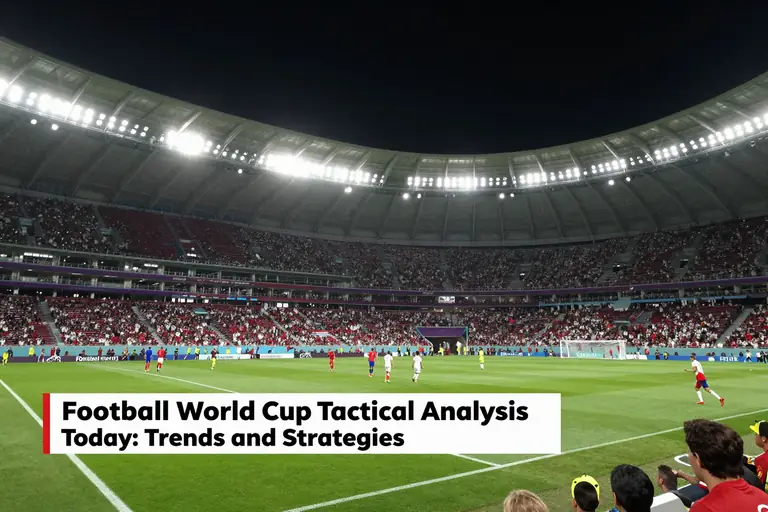

The Evolving Game: Football World Cup Tactical Storylines to Watch
As the next Football World Cup approaches, football fans worldwide are not just anticipating thrilling goals and dramatic upsets; we’re also keenly observing the tactical battles that unfold on the pitch. Modern football is increasingly complex, with coaches constantly innovating and adapting. So, what are the most compelling Football World Cup Tactical Breakdown of the Biggest Match tactical storylines to watch out for in the upcoming tournament? Our site has been analyzing recent international friendlies and qualification matches to bring you our insights.
The tournament is a melting pot of different footballing philosophies. From high-pressing European giants to technically gifted South American sides and defensively robust African teams, each nation brings its unique approach. Understanding these underlying strategies is key to appreciating the beautiful game at its highest level. We believe the tactical nuances will be as captivating as the individual brilliance of the players.
The Dominance of the Back Three (or Five)
One of the most significant tactical shifts in recent years has been the resurgence and evolution of the back three (or back five, depending on how you count the wing-backs). Once considered a niche formation, it’s now a staple for many top club and national teams. We see this system offering both defensive solidity and attacking width, especially when wing-backs push high up the pitch.
Teams employing this system often aim to create numerical superiority in midfield and provide overlapping runs from wide areas. The success of this setup heavily relies on the quality and stamina of the wing-backs, who need to cover immense ground. We anticipate several nations will lean on this formation, particularly when facing stronger attacking opponents, allowing them to absorb pressure and launch quick counter-attacks.
The False Nine’s Enduring Appeal and Its Successors
The false nine, popularized by teams like Spain and Barcelona, revolutionized how we think about the central striker. Instead of a traditional target man, a creative midfielder drops deep, pulling defenders out of position and creating space for wide forwards or attacking midfielders to run into. While not as universally adopted as it once was, its principles continue to influence attacking play.
Now, we’re seeing variations. Some teams utilize a “hybrid” nine, a player who can both drop deep and play as a conventional striker. Others might opt for a fluid front three, where positions are constantly interchanged, making it incredibly difficult for opposition defenders to mark. The tactical storyline here will be how different coaches use their most advanced player(s) to dismantle organized defenses.
High Press vs. Low Block: The Eternal Tug-of-War
The contrast between high-pressing teams and those that prefer a deep, compact low block will undoubtedly be a central Football World Cup Tactical Storyline to Watch. Many top teams now employ an aggressive high press, aiming to win the ball back in advanced areas, disrupt the opponent’s build-up, and create immediate goal-scoring opportunities. This requires immense fitness, coordination, and a brave defensive line.
Conversely, numerous nations, especially those considered underdogs, will likely adopt a low block strategy. This involves sitting deep, denying space in and around their penalty area, and forcing opponents to play wide or attempt long-range shots. Their success hinges on defensive discipline, tireless work rate, and the ability to launch effective counter-attacks with limited possession. The matches where these contrasting styles collide promise fascinating tactical battles.
The Role of the Deep-Lying Playmaker
The deep-lying playmaker, often referred to as the ‘regista’ or ‘number six’, remains a crucial figure in modern football. This player dictates the tempo, distributes the ball, and often screens the defense. Their ability to break lines with incisive passes and control the flow of the game is invaluable.
We’ll be watching how different coaches utilize this role. Some might pair them with a more defensively minded midfielder, creating a double pivot, while others might deploy a single pivot, demanding more defensive responsibility from the playmaker. The performance of these orchestrators could be the difference between a team dominating possession and ultimately winning matches, or struggling to maintain control.
Set-Piece Specialization
In tight matches, set pieces can often be the deciding factor. We’ve seen an increasing focus on specialized routines, both offensively and defensively, at the highest level. Teams now employ dedicated set-piece coaches and spend countless hours refining their strategies for corners, free-kicks, and even throw-ins near the opponent’s box.
From clever blocks and runs to specific delivery types and zonal marking schemes, expect to see innovative and well-drilled set-piece plays. A single well-executed corner or free-kick routine can unlock a stubborn defense or provide a crucial equalizer. This tactical aspect, while often overlooked, will certainly contribute to the overall Football World Cup Tactical Storylines to Watch.
Player-Specific Tactical Adjustments
Beyond broader team formations, coaches will also make specific tactical adjustments based on individual star players. How will teams neutralize the opposition’s most dangerous attackers? Will they employ man-marking, double-teaming, or try to cut off their supply lines?
Similarly, how will coaches maximize the impact of their own creative talents? Will they be given a free role, or will their positioning be more structured to exploit specific weaknesses in the opposition? The individual duels and the tactical plans designed around specific players will add another layer of intrigue to every match.
FAQ
What is a “false nine” in football tactics?
A false nine is a center-forward who drops deep into midfield instead of staying high, aiming to pull opposing central defenders out of position and create space for teammates to run into.
Why is the back three formation becoming popular again?
The back three (or five) offers both defensive solidity and attacking width through wing-backs, providing flexibility in both phases of play and allowing teams to match opponent formations.
What is the difference between a high press and a low block?
A high press involves aggressively closing down opponents in their half to win the ball back quickly, while a low block means defending deep and compactly near one’s own penalty area to deny space.
What role does a deep-lying playmaker serve?
A deep-lying playmaker, often a central midfielder, dictates the team’s tempo, distributes the ball, and screens the defense, essentially acting as the team’s primary ball progressor and controller.
How important are set pieces in modern football?
Set pieces are highly important, especially in tight matches, as they offer structured opportunities to score goals or create chances, often requiring specialized routines and dedicated preparation.