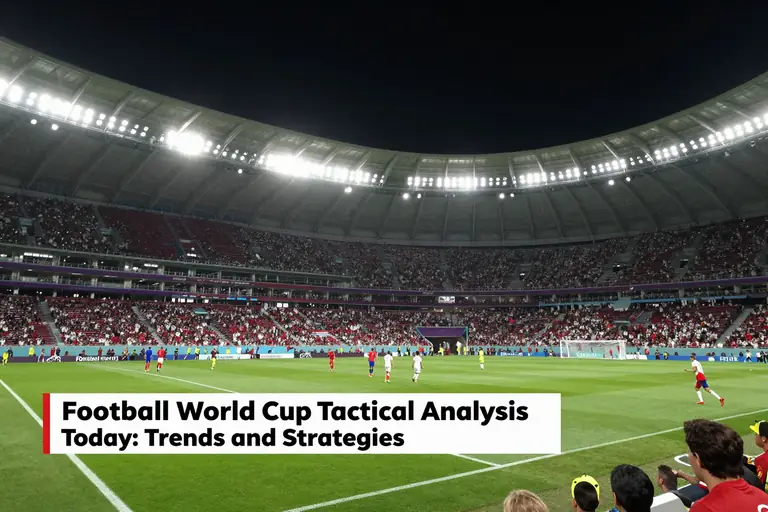
The Football World Cup isn’t just about goals; it’s a grand stage for tactical brilliance and team movement. Understanding these elements offers a deeper appreciation of the game, helping fans and analysts grasp why certain teams excel. This review delves into common tactical trends, mid-game and mid-tournament adjustments, and the impact of these shifts on overall performance.
World Cup Tactical Approaches
At the World Cup, strategic and tactical approaches are paramount. Teams meticulously organize themselves in and out of possession, managing transitions and defining individual player roles to contribute to a collective strategy. From aggressive high-pressing systems designed for quick ball recovery to deep defensive blocks aimed at frustrating opponents, every tactical decision is a calculated risk with significant potential rewards.
Evolution of Formations and Player Roles
Modern football demands tactical flexibility. Teams often start with one formation and seamlessly transition to another based on possession, opponent strategy, or game phase. For instance, a 3-4-3 in attack, with wing-backs pushing high, can transform into a compact 5-4-1 defensively. This fluidity requires intelligent players capable of understanding multi-phase roles and covering various positions. Midfielders are particularly crucial, acting as pivots for both defense and attack, tasked with breaking up play, initiating counter-attacks, and even joining the forward line.
The ‘false nine’ is another evolving role, where a striker drops deep, drawing central defenders out and creating space for wingers or attacking midfielders. This disorients defenses accustomed to traditional center-forwards, highlighting the importance of understanding evolving player roles in tactical battles.
Key Defensive and Offensive Movement Patterns
Team movement extends beyond formations to coordinated player actions with and without the ball. Defensively, high pressing involves forwards and midfielders aggressively closing down opponents to win the ball back quickly, demanding immense stamina and coordination. Conversely, a low block strategy involves sitting deep, inviting pressure, and then countering rapidly. This relies on disciplined defending and quick transitions.
Offensively, off-the-ball movement is critical. Overlapping runs from full-backs, underlapping runs from midfielders, and intelligent runs into channels create space and passing options. Intricate passing triangles and diamond shapes maintain possession and draw defenders out of position. The quick one-two pass remains a timeless and effective offensive movement, showcasing the intricate choreography of top-tier football.
Mid-Match and Tournament Adjustments
Elite World Cup teams excel at adaptation. Coaches constantly analyze opponents, making adjustments before and during matches. A mid-match shift might involve bringing on a defensive midfielder to solidify the center when leading, or introducing a second striker when chasing a goal. Substitutions are tactical changes, not just for fresh legs, designed to exploit weaknesses or counter opponent strengths. For example, a pacy winger might be introduced to target a struggling full-back. Throughout a tournament, teams evolve tactics based on previous results, injuries, or upcoming opponents, demonstrating the critical role of in-game and in-tournament adjustments in crucial matches.
Impact of Individual Brilliance within Tactical Frameworks
While tactics provide structure, individual brilliance provides the spark. A perfect tactical plan can be undone by a moment of individual genius, just as superior team organization can nullify brilliant individual performance. The best teams integrate star players into their tactical framework, granting them freedom while ensuring they contribute to the overall strategy. A creative playmaker in a free role, for instance, might lack strict defensive duties but is integral to unlocking defenses with their movement and passing vision. Similarly, a world-class goalkeeper initiates attacks with accurate distribution. Balancing rigid structure with creative freedom is often the hallmark of a champion team.
Analyzing Team Movements: Practical Tips
To deepen your analysis of World Cup matches, focus on players without the ball: their positioning, space creation, and passing lane closures. Observe transitions: how quickly teams switch from defense to attack, or vice versa, indicating tactical discipline and fitness. Look for patterns in set pieces, which are often meticulously planned and reveal offensive creativity. Finally, consider the impact of substitutions: do they change the team’s shape or tempo, and what specific role is the substitute playing? These observations move beyond merely watching the ball, revealing the deeper tactical game.
Online Betting Considerations for Philippine Users
For Philippine users interested in World Cup betting, prioritize safety and account protection. Choose reputable platforms with advanced encryption (SSL), strong password requirements, two-factor authentication (2FA), and clear privacy policies. Monitor account activity and report suspicious behavior immediately. Never share login credentials and beware of phishing attempts.
Familiarize yourself with withdrawal speeds and fees. Some platforms offer instant e-wallet withdrawals, while bank transfers take longer. Check for minimum/maximum limits and hidden fees. Network fees may apply, especially for crypto withdrawals, so review terms carefully.
KYC (Know Your Customer) and account verification are standard. Expect to provide ID and proof of address to prevent fraud and ensure legal gambling age. This protects both users and the platform. Ensure the platform clearly outlines its KYC process and data handling.
A good platform for Philippine users offers diverse payment methods: debit/credit cards, bank transfers, and popular e-wallets like GCash, PayMaya, and PayPal. Some support cryptocurrencies. Choose convenient, secure methods with low transaction fees.
Who This Suits and Who It Does Not Suit
Understanding World Cup team movement and tactics suits football enthusiasts, analysts, and strategic thinkers. It’s ideal for bettors who make informed decisions based on in-depth game analysis, aspiring coaches, and players. However, it may not suit casual fans seeking a simpler, entertainment-focused viewing experience, or those looking for quick, uninformed betting wins, as tactical analysis demands time and dedication.
Philippines User Notes
Philippine users should choose legally accessible platforms tailored to the local market. Look for sites supporting Philippine Peso (PHP) transactions and offering customer support in English or Tagalog. Be mindful of local online gambling regulations. Prioritize platforms with strong reputations for security and fair play, providing clear terms of service relevant to Filipino users. Always bet within limits and play smart and safe.
FAQ
How do teams typically adjust their tactics during a World Cup match?
Teams adjust by changing formations, making substitutions to alter team balance, or instructing players to take on different roles. This could involve switching to a more defensive setup when leading or introducing offensive players when trailing.
What is the significance of off-the-ball movement in football tactics?
Off-the-ball movement is crucial for creating space, drawing defenders out of position, and providing passing options. Without intelligent runs and positioning, attacks become predictable and easier to defend.
How do coaches decide on their tactical approach for different World Cup opponents?
Coaches extensively scout opponents, analyzing strengths, weaknesses, preferred formations, and key players. This analysis informs a game plan designed to exploit weaknesses and neutralize threats, which may vary significantly between matches.