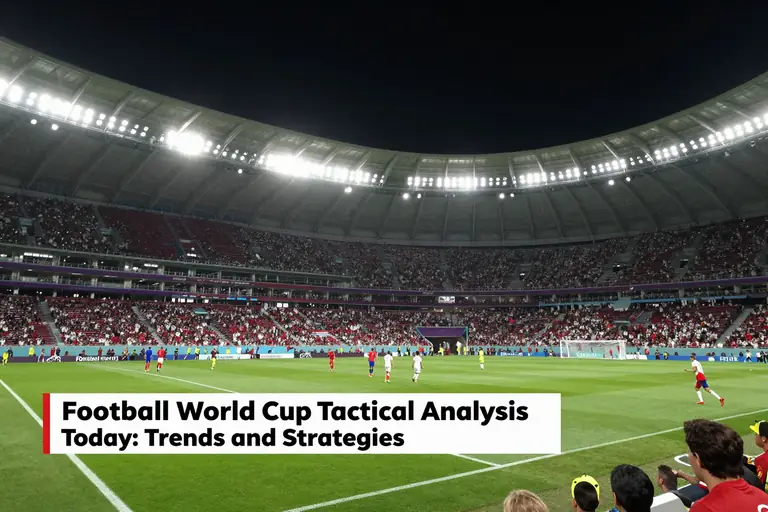
When watching the Football World Cup, it’s easy to get caught up in the excitement of goals and dramatic saves. But for those who want to truly appreciate the beautiful game, understanding the underlying match tactics is key. These strategies are the blueprints coaches use to try and win, adapting to opponents, player strengths, and even the flow of a game. On our site, we aim to break down these complex ideas into understandable insights, helping you see beyond the surface.
The Foundation: Formations and Their Purpose
Every team starts with a formation, which is essentially how players are positioned on the field. This isn’t just about where they stand; it dictates roles, responsibilities, and how a team moves with and without the ball.
Popular Formations Explained:
- 4-3-3: The Attacking Powerhouse. This formation uses four defenders, three midfielders, and three forwards. It’s often favored by teams looking to dominate possession and create numerous scoring opportunities. The two wingers in the front three are crucial, often cutting inside or providing width for crosses. Midfielders need to be versatile, supporting both defense and attack.
- 4-2-3-1: The Flexible Option. Similar to the 4-3-3 but with a slightly more withdrawn attacking midfielder (the ‘number 10’) behind a lone striker. The two deeper midfielders provide a strong defensive shield, while the attacking midfielder links play and creates chances. This formation offers a good balance between attack and defense.
- 3-5-2 (or 5-3-2): The Wing-Back System. This formation uses three central defenders, with two wing-backs who cover the entire flank, acting as both defenders and attackers. The midfield three provide control, and two strikers aim to capitalize on chances. It can be very effective in overwhelming opponents on the wings but requires incredibly fit and disciplined wing-backs.
- 4-4-2: The Classic. A traditional and often very solid formation with four defenders, four midfielders, and two strikers. It emphasizes defensive solidity and relies on the two strikers working in tandem, often one dropping deeper to link play while the other plays off the shoulder of the last defender.
The choice of formation often reflects the coach’s philosophy and the specific players available. A coach might switch formations mid-game if things aren’t going to plan or to counter an opponent’s change.
Defensive Strategies: Building a Wall
Defending in the World Cup isn’t just about individual tackles; it’s a collective effort.
Key Defensive Approaches:
- High Press: This involves pushing defenders and midfielders high up the pitch to try and win the ball back close to the opponent’s goal. The aim is to disrupt their build-up play and create immediate scoring chances. It requires immense stamina and coordination but can be very effective when executed well.
- Low Block: Conversely, a low block means a team sits deep, often with all players behind the ball, protecting their own penalty area. This strategy aims to deny space in dangerous areas and force the opponent to shoot from long range or cross into a crowded box. It’s often used by underdog teams or when trying to protect a lead.
- Man-Marking vs. Zonal Marking: Man-marking involves each defender being responsible for a specific opponent. Zonal marking, on the other hand, means defenders are responsible for specific areas of the pitch, picking up any opponent who enters their zone. Most modern teams use a hybrid approach, combining elements of both.
A strong defense is often the bedrock of a successful World Cup campaign. Teams that concede fewer goals tend to go further in the tournament.
Attacking Tactics: Breaking Through
Scoring goals requires creativity, precision, and often, a well-drilled plan.
Effective Attacking Methods:
- Counter-Attack: This strategy involves soaking up pressure and then quickly launching an attack once possession is won. Speed and direct passing are crucial to catch the opponent’s defense out of position. Many memorable World Cup goals have come from devastating counter-attacks.
- Positional Play (Juego de Posición): Emphasizes maintaining possession, creating numerical advantages in different areas of the pitch, and moving the ball to disorganize the opponent’s defense. This approach often involves intricate passing patterns and patient build-up.
- Wing Play: Utilizing the wide areas of the pitch to create chances. This can involve wingers taking on defenders one-on-one, or full-backs overlapping to deliver crosses into the box. It’s a classic way to stretch a defense.
- Set Pieces: Corners, free kicks, and throw-ins are often overlooked but can be vital. Teams dedicate significant training time to designing routines for these situations, aiming to exploit defensive weaknesses and create scoring opportunities. A well-executed set piece can be the difference in a tight match.
The best attacking teams often have multiple ways to score, making them unpredictable and harder to defend against.
In-Game Adjustments and Managerial Impact
A World Cup match is a dynamic chess game. Coaches don’t just set a plan and stick to it; they constantly assess the situation and make adjustments. This could involve:
- Substitutions: Bringing on fresh legs, changing a player’s role, or introducing a different type of player to exploit an opponent’s weakness.
- Formation Changes: Shifting from a 4-3-3 to a 4-4-2, for example, to gain more midfield control or add another striker.
- Tactical Instructions: Telling players to press higher, drop deeper, switch flanks, or target a specific opponent.
The ability of a manager to read the game and make the right adjustments can often be the deciding factor in close encounters. We’ve seen countless examples in World Cup history where a tactical tweak turned the tide of a match.
Why Understanding Tactics Matters
For us, appreciating the Football World Cup Match Tactics Explained means more than just knowing who wins. It’s about understanding the “how” and the “why.” It adds a layer of depth to your viewing experience, turning a simple game into a strategic battle. You start to notice the subtle movements, the defensive shifts, and the attacking patterns that often go unnoticed by the casual observer. This deeper insight allows you to truly appreciate the skill, intelligence, and preparation that goes into every single match on the world’s biggest footballing stage.
FAQ
What is the most common formation used in the World Cup?
While formations vary greatly, the 4-2-3-1 and 4-3-3 have been very popular in recent World Cups due to their balance and attacking potential, allowing for both possession-based and counter-attacking styles.
How do teams adapt their tactics against different opponents?
Teams often scout opponents extensively, tailoring their formation, defensive intensity, and attacking focus to exploit weaknesses or neutralize key players. A team might play more defensively against a strong attacking side and more expansively against a weaker one.
Can individual player brilliance overcome poor tactics?
While individual brilliance can certainly win a moment or even a match, consistent success in a tournament like the World Cup usually requires strong team tactics. A well-drilled team with a clear strategy can often overcome a collection of talented individuals who lack cohesion.