Introduction: The Heart of the Game
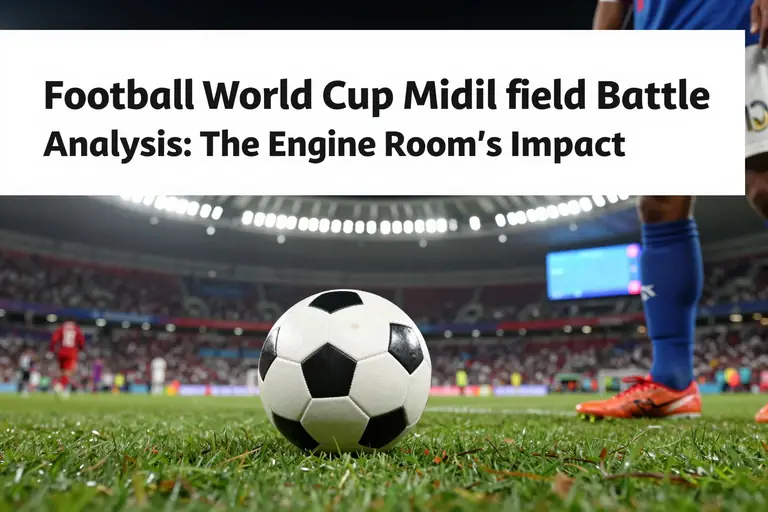
In the high-stakes environment of the Football World Cup, every pass, tackle, and run is magnified. While strikers grab headlines and defenders prevent goals, the true engine room of any successful team lies in the midfield. It’s where games are won and lost, where tactical blueprints come to life, and where control is asserted. Our Football World Cup Midfield Battle Analysis will break down why this area is so crucial, examining the different roles, key players, and tactical approaches that define success on the global stage. Understanding the midfield battle is key to appreciating the nuances of tournament football.
Tactical Overview: Different Midfield Approaches
Not all midfields are created equal, and national teams often adapt their strategies based on their player pool and the opposition. We see a variety of approaches at the World Cup, each with its own strengths and weaknesses.
The Deep-Lying Playmaker (The “Regista”)
This role is often occupied by a player with exceptional vision and passing range, dictating the tempo from deep. Think of players who can spray passes across the field, break lines with incisive through balls, and recycle possession efficiently. Their primary job isn’t always to get forward, but to ensure the ball moves smoothly from defense to attack, acting as the team’s central nervous system. When a team has a strong regista, they often control possession and can wear down opponents.
The Box-to-Box Midfielder
These are the workhorses, covering vast amounts of ground from their own penalty area to the opponent’s. They are crucial for both defensive solidity and offensive thrust, arriving late in the box to score or making vital tackles to break up play. A team with multiple effective box-to-box midfielders can overwhelm opponents with their relentless energy and presence in both halves of the pitch. Their ability to contribute in all phases of play makes them invaluable.
The Attacking Midfielder (The “Number 10”)
Often the creative hub, the number 10 operates in the space between the opposition’s midfield and defense. Their role is to link up with strikers, create chances through intricate passing, and sometimes even score themselves. A truly gifted attacking midfielder can unlock the tightest defenses, providing that moment of magic needed to win a difficult match. Their presence can transform a team’s attacking potency.
The Defensive Midfielder (The “Anchor”)
This player shields the defense, breaking up opposition attacks, winning tackles, and intercepting passes. While their work might not always be flashy, it’s absolutely vital. They provide a protective screen, allowing more attacking players to venture forward with confidence. A solid defensive midfielder is the foundation upon which many successful World Cup campaigns are built, offering balance and stability.
Player Watch: Midfield Maestros to Monitor
Every World Cup brings new heroes and reaffirms the brilliance of established stars. In the midfield, certain players consistently stand out due to their unique skill sets and ability to influence matches. We’ve seen legends like Zinedine Zidane, Xavi, and Andrea Pirlo define eras with their midfield dominance.
- The Orchestrators: Look for players who rarely misplace a pass and always seem to have time on the ball. They are the ones who control the rhythm of the game, slowing it down or speeding it up as needed. Their decision-making under pressure is often what separates good teams from great ones.
- The Engine Rooms: These are the players who cover every blade of grass, winning back possession and driving their team forward. Their stamina and tenacity are key, especially in a physically demanding tournament. They can turn the tide of a game through sheer effort.
- The Game Changers: Often found in advanced midfield roles, these players possess the flair and creativity to unlock defenses. A moment of individual brilliance from one of these players can be the difference between a draw and a win.
Keeping an eye on these types of players will give you a deeper understanding of the tactical battles unfolding in each match. Their individual performances are often reflective of their team’s overall control of the midfield.
Impact of the Midfield Battle on Tournament Success
History shows us that teams with dominant midfields often go deep in the World Cup. Why is this the case? Control of the midfield translates into several key advantages:
- Possession: More time on the ball means more opportunities to create chances and less time defending. This conserves energy and frustrates opponents.
- Tempo Control: A strong midfield dictates the pace of the game, allowing their team to play to their strengths and minimize the opponent’s impact.
- Defensive Shield: An organized midfield protects the defense, reducing the number of direct attacks and shots on goal.
- Transition Play: Effective midfields are crucial for both winning the ball back and launching quick counter-attacks, turning defense into offense swiftly.
- Psychological Edge: Dominating the midfield can demoralize opponents, making them chase the game and commit errors.
This is why every coach prioritizes winning the Football World Cup Midfield Battle. It’s the foundation for any successful tactical plan.
Historical Context: Midfield Dominance in Past World Cups
Looking back at past tournaments, the pattern of midfield dominance becomes clear. The Spanish teams that won in 2010, for example, built their success on the unparalleled control exerted by Xavi and Andrés Iniesta. Their intricate passing and movement overwhelmed opponents, allowing them to dictate play from start to finish.
Similarly, the German side that triumphed in 2014 showcased a powerful and versatile midfield, with players like Toni Kroos and Bastian Schweinsteiger providing both creativity and steel. They could adapt to various opponents, always maintaining a strong presence in the central areas.
Even teams known for their attacking flair, like Brazil’s 2002 squad, had a robust midfield that underpinned their offensive brilliance. Gilberto Silva and Kleberson provided the defensive balance that allowed Ronaldinho, Rivaldo, and Ronaldo to shine. These examples underscore the timeless importance of a well-drilled and talented midfield unit in achieving ultimate glory.
FAQ
What is the primary role of a midfield in the World Cup?
The primary role of a midfield in the World Cup is to control the flow of the game, linking defense and attack, winning possession, and creating scoring opportunities for their team.
How do different midfield tactics affect a team’s performance?
Different midfield tactics, such as using a deep-lying playmaker or box-to-box midfielders, allow teams to adapt to opponents, exploit weaknesses, and play to their own strengths, significantly impacting possession, defense, and attack.
Which types of players are most crucial in the Football World Cup Midfield Battle?
Players such as deep-lying playmakers, box-to-box midfielders, attacking midfielders, and defensive midfielders are all crucial, each contributing unique skills that collectively define a team’s control and effectiveness in the midfield.
Why is winning the midfield battle considered so important for World Cup success?
Winning the Football World Cup Midfield Battle is vital because it often leads to greater possession, better tempo control, a stronger defensive shield, and more effective transition play, all of which are key indicators of tournament success.