Understanding World Cup Tactics: Beyond the Scoreline
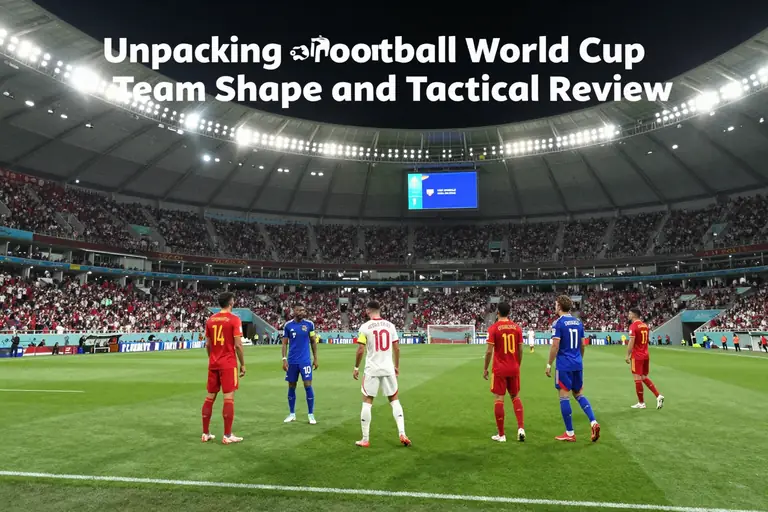
When the Football World Cup rolls around, our attention often fixes on spectacular goals, dramatic upsets, and the final score. But for those who truly love the beautiful game, there’s a deeper layer to appreciate: the intricate world of Football World Cup Team Shape and Tactical Review. This isn’t just about formations on paper; it’s about how teams adapt, how players execute roles, and the strategic chess match unfolding over 90 minutes. Here on our site, we aim to pull back the curtain and explore these fascinating tactical nuances that often dictate a team’s destiny in the biggest tournament of all. Our coverage always considers these factors when providing a Football World Cup team shape and tactical review.
The Evolution of Team Shape in World Cups
Football tactics are constantly evolving, and the World Cup stage often serves as a showcase for these innovations. Gone are the days when a rigid 4-4-2 was the only option. Modern football sees teams fluidly shifting between defensive solidity and attacking prowess, often within the same passage of play. We’ve witnessed the rise of the false nine, the inverted winger, and the importance of full-backs as primary attacking outlets. Understanding a team’s shape means observing their defensive block, their attacking patterns, and how they transition between these phases. For instance, a team might start in a 4-3-3 but defend in a 4-4-2, with one winger dropping deep to cover the midfield.
Key Tactical Approaches to Watch For
Several tactical philosophies consistently appear in World Cup campaigns, each with its own strengths and weaknesses. Let’s break down some of the most prominent:
- Possession-Based Football (Tiki-Taka): Popularized by Spain, this approach emphasizes retaining the ball, intricate passing, and patiently waiting for openings. The goal is to control the tempo and frustrate opponents by denying them possession. The challenge lies in converting possession into genuine scoring opportunities and avoiding predictable passing.
- Counter-Attacking Football: Often employed by teams with blistering pace upfront, this strategy focuses on absorbing pressure and then launching swift, incisive attacks once possession is regained. It requires disciplined defending and clinical finishing. Teams like France in recent tournaments have shown how effective this can be.
- High Pressing: This aggressive tactic involves pushing high up the pitch to win the ball back quickly, often in the opponent’s half. It demands immense fitness and coordination but can suffocate opponents and create immediate scoring chances. Germany under Jogi Löw showcased this effectively.
- Defensive Solidity and Set Pieces: Some teams prioritize a strong defensive foundation, aiming to keep clean sheets and capitalize on set-piece opportunities (corners, free kicks). This can be a highly effective strategy for underdog teams looking to grind out results.
Each of these approaches, when executed well, can lead to success. The true tactical genius lies in adapting these strategies to the specific opponent and game situation.
Player Roles and Their Impact on Team Shape
It’s not just about the numbers in a formation; it’s about the specific responsibilities assigned to each player. A central midfielder in one team might be a deep-lying playmaker, dictating tempo, while in another, they might be a box-to-box engine, contributing to both defense and attack. Full-backs are no longer just defenders; they are often crucial in providing width and delivering crosses. The role of the goalkeeper has also evolved, with many now acting as a ‘sweeper-keeper,’ actively participating in build-up play. Analyzing a team’s shape requires understanding these individual roles and how they interlink to create a cohesive unit.
Team Analysis: How Form Influences Tactics
Recent performances and team form heavily influence tactical decisions. A team on a winning streak might stick to a tried-and-tested system, while one struggling for results might experiment with new formations or player combinations. Injuries to key players can also force a manager to rethink their entire strategy, potentially leading to a more conservative approach or a reliance on different strengths within the squad. Our coverage always considers these factors when providing a Football World Cup team shape and tactical review.
Tactical Overview: What to Expect in Upcoming Matches
Looking ahead, we anticipate a continued emphasis on tactical flexibility. Managers will likely prepare multiple game plans, ready to switch formations or adjust player roles mid-match based on how the game is unfolding. Expect to see teams trying to exploit opposition weaknesses through targeted pressing traps, intelligent movement off the ball, and strategic substitutions. The ability to react quickly to in-game situations will be paramount. The best teams won’t just have a Plan A; they’ll have a Plan B, C, and D ready to deploy.
Historical Context: Lessons from Past World Cups
Reviewing past World Cups offers valuable insights. Brazil’s 1970 team, with its attacking flair, demonstrated the beauty of individual brilliance within a fluid system. Italy’s 2006 triumph showcased the power of a disciplined defense and opportunistic counter-attacks. Germany’s 2014 victory was a masterclass in collective pressing and clinical finishing. Each tournament leaves its tactical footprint, informing future approaches. These historical examples remind us that there’s no single “correct” way to win; rather, it’s about finding the best tactical fit for the available talent and the specific challenges of the competition.
FAQ
What is “team shape” in Football World Cup team shape and tactical review?
Team shape refers to how players position themselves on the field both with and without the ball, forming a collective unit for defense or attack.
How do formations impact team shape?
Formations provide the initial framework for team shape, dictating where players generally start, but the actual shape is fluid and changes based on game situations.
Why is tactical flexibility important in the World Cup?
Tactical flexibility allows teams to adapt to different opponents, respond to in-game developments, and overcome challenges like injuries or suspensions.
What is a “false nine” and how does it affect tactics?
A false nine is a forward who drops deep into midfield, pulling central defenders out of position and creating space for wingers or midfielders to run into.
How can I better understand a team’s tactics while watching a game?
Focus on player movement off the ball, how the team defends when they lose possession, and how they transition from defense to attack to grasp their tactical approach.