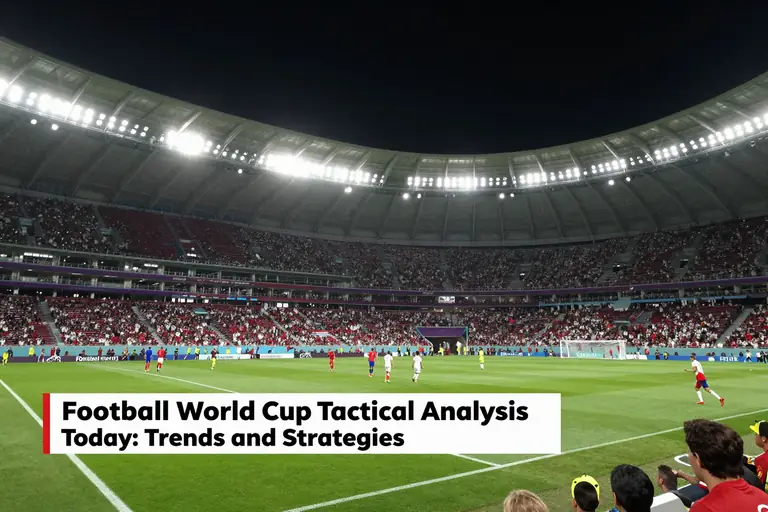
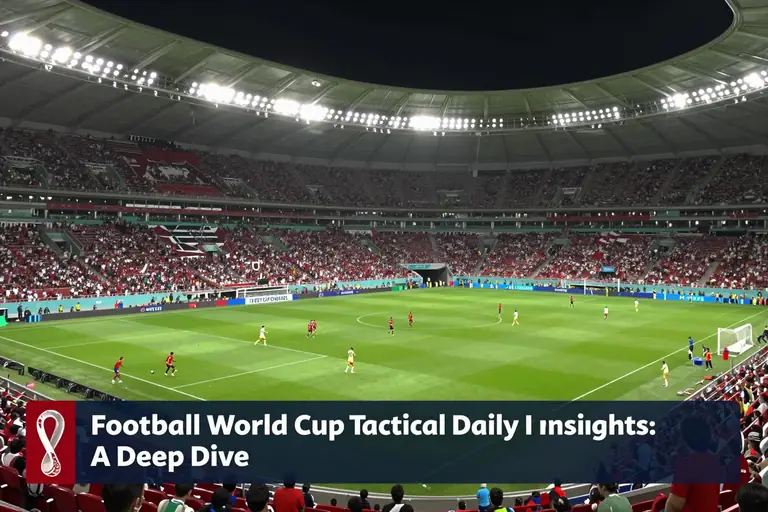
Unlocking the Secrets of World Cup Tactics
The FIFA World Cup is more than just a game; it’s a meticulously planned and executed strategy brought to life on the field. To truly appreciate the game, you need to understand the insights that emerge and the strategic elements at play.
This isn’t just about who scored the most goals. It’s about how they scored, why they scored, and what the opposing team could have done to prevent it. It’s about understanding the subtle nuances of positional play, the effectiveness of different pressing systems, and the impact of individual brilliance within a structured tactical framework.
The Evolving Landscape of World Cup Tactics
The modern game is constantly evolving, and the World Cup serves as a showcase for the latest tactical innovations. We’re seeing a move towards more fluid formations, with players comfortable operating in multiple positions. The days of rigid 4-4-2s are largely gone, replaced by more adaptable systems that can shift depending on the opponent and the game situation.
One of the key trends is the increased emphasis on high pressing. Teams are no longer content to sit back and absorb pressure; they want to win the ball back high up the pitch and launch quick counter-attacks. This requires incredible fitness levels and a coordinated pressing scheme.
Another important aspect is the use of data analytics. Teams are now using sophisticated software to track player movements, analyze passing patterns, and identify weaknesses in the opposition’s defense. This information is then used to inform tactical decisions and prepare players for specific challenges.
Daily Insights: What We’re Learning from Each Match
Each day of the World Cup brings new insights and tactical talking points. Here are some of the key observations we’ve made recently:
- The Importance of Midfield Control: Teams that dominate the midfield tend to dominate the game.
- The Role of Full-Backs: Modern full-backs are also key attacking outlets.
- Set-Piece Strategies: Set-pieces can be a crucial source of goals.
- The Impact of Substitutions: A well-timed substitution can change the course of a game.
Understanding these daily insights is crucial for anyone who wants to truly appreciate the tactical complexities of the World Cup.
Analyzing Key Tactical Battles
The World Cup is full of fascinating tactical battles, as coaches try to outwit each other. One of the most interesting battles has been between teams employing a high press and those who prefer to play out from the back.
When a team presses high, they try to force the opposition into making mistakes. This can be very effective, but it can also leave them vulnerable to counter-attacks if the press is broken.
Teams that prefer to play out from the back try to build their attacks patiently. This requires technically gifted players, but it can be a very effective way of controlling the game and creating scoring opportunities.
The Future of Football Tactics: What’s Next?
So, what does the future hold for football tactics? It’s difficult to say for sure, but we can make some educated guesses based on current trends.
One thing is clear: the game will continue to become more data-driven. Teams will increasingly rely on data analytics.
We’re also likely to see more experimentation with formations and playing styles. Coaches will be looking for new ways to surprise their opponents.
Another key area of development will be in the realm of player development. Teams will be looking to train players who are more versatile and adaptable.
The Importance of Understanding Formations
A team’s formation is the foundation upon which their tactical approach is built. Understanding common formations is essential.
The 4-3-3, for example, is a popular formation that allows for a strong attacking presence. The 3-5-2 is another formation that has seen a resurgence, offering defensive solidity and attacking width. The 4-2-3-1 provides a balance between attack and defense.
The effectiveness of any formation depends on the players’ ability to execute the coach’s instructions.
The Influence of Individual Brilliance
While tactical systems and formations are crucial, the influence of individual brilliance cannot be overlooked.
Lionel Messi’s dribbling ability, Cristiano Ronaldo’s finishing prowess, and Neymar’s creativity are all examples of individual qualities that can elevate a team’s performance.
However, it’s important to note that individual brilliance is most effective when it is integrated into a cohesive tactical framework.
The Role of the Coach in Tactical Success
The coach plays a pivotal role in shaping a team’s tactical approach. The coach is responsible for analyzing the opposition, developing a game plan, selecting the right players, and making tactical adjustments during the game.
A successful coach must possess a deep understanding of the game, strong leadership skills, and the ability to communicate effectively with their players.
The coach’s influence extends beyond the tactical realm. They are also responsible for creating a positive team environment.
For more insights, check out Football World Cup Tactical Analysis Today.
The Psychological Aspect of Tactics
Tactics extend beyond formations and player positioning; they encompass the psychological aspect of the game.
A team that is mentally prepared and confident is more likely to take risks and overcome adversity. Conversely, a team that is lacking in confidence may be hesitant.
Coaches often employ psychological strategies to motivate their players and build team cohesion.
The Impact of VAR on Tactical Decision-Making
The introduction of Video Assistant Referee (VAR) has had a significant impact on tactical decision-making in football.
However, VAR has also been the subject of controversy.
Despite the controversy, VAR is now an established part of the game, and coaches and players must adapt their tactics accordingly.
FAQ
Q: What exactly are World Cup tactical insights?
A: It’s analysis of matches, formations, and strategies used during the World Cup.
Q: How can understanding tactics improve my viewing experience?
A: By learning about the tactics, you’ll gain a deeper appreciation for the strategic decisions.
Q: Where can I find more tactical insights?
A: Many sports news outlets and blogs offer analysis and commentary during the World Cup.